The full story
We didn't start with an idea for software.We started with our own business.
For years we worked inside a family distribution business: orders, a warehouse, customers, sales reps, suppliers, drivers, bookkeeping and endless small details. We had systems. And still, it was people who bridged the gaps between them.
Before NextERP
The ERP recorded what happened. It didn't understand what was happening.
An order came in by phone, was written on a sheet of paper, typed into the system and printed for the warehouse. In the warehouse, people searched for the goods. In the office, someone checked again. Every handoff between a person and a system was one more place for a mistake, and one more person who had to remember to check.
The knowledge that really mattered wasn't in the system. It was with people: who remembers where the pallet is, which customer gets which price, what's left at the end of the month.
- Phone call
- Paper note
- Typed into the ERP
- Printed for the warehouse
- Search in the warehouse
- Checked again in the office
“After years inside the family business, we stopped accepting that this is how work has to be done.”
What went wrong, again and again
The same problems, week after week.
Products reached their expiry date on the shelf, and nobody knew until it was too late.
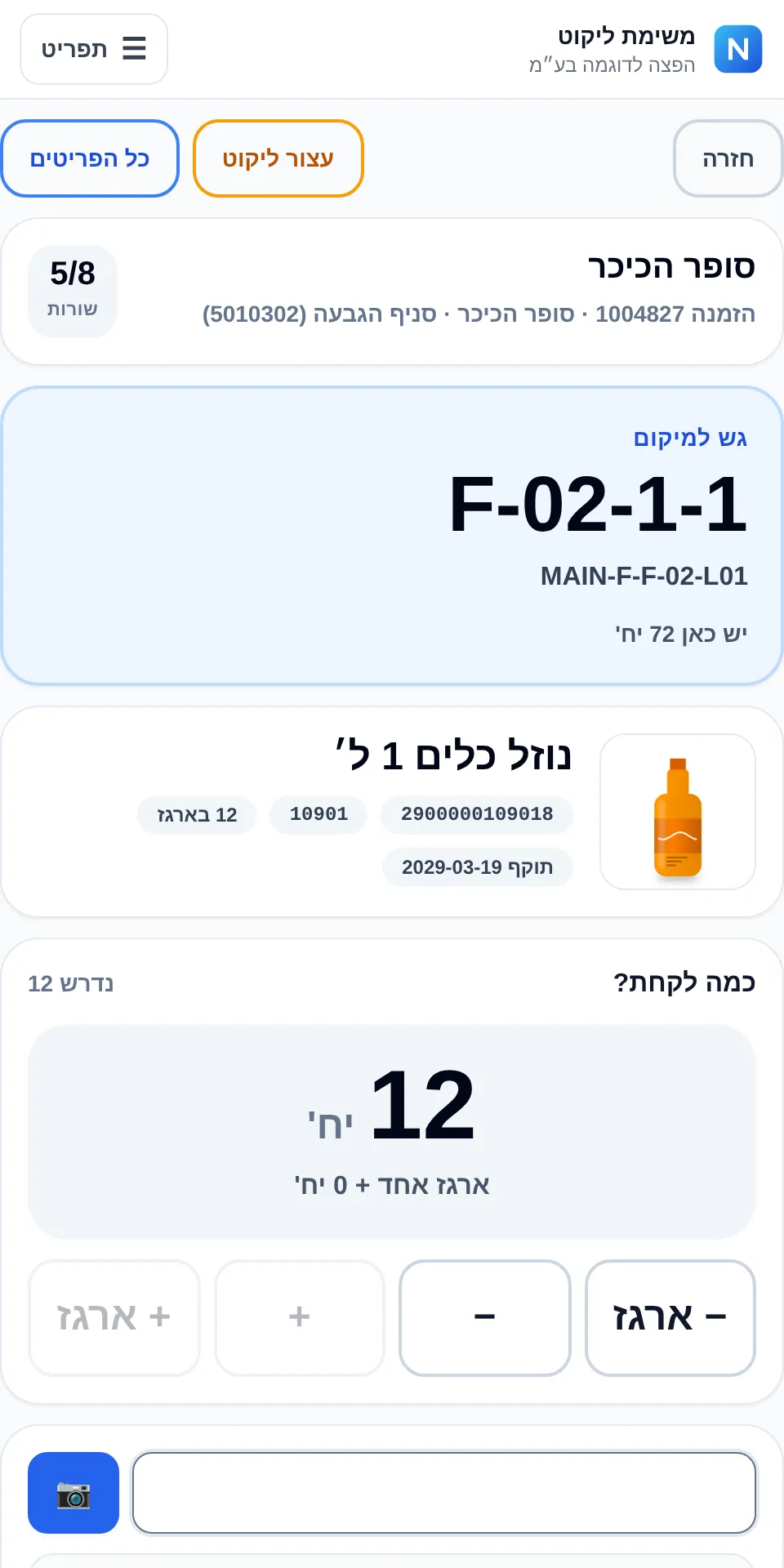
Pickers searched the warehouse for goods, because the system knew how much there was, not where.
Stock in the system and stock on the shelf drifted apart, and every count turned into a project.
A sales rep stood in front of a customer with no picture, no availability and no certainty about the price.
Prices, assortments and promotions were managed by hand, and relied on whoever remembered.
The same product was maintained over and over in different places, and it was never right in all of them.
Orders passed between people and systems, and were typed in more than once.
Management found problems after they happened, not while they were happening.
A simple question about stock or an order ended in a few phone calls and an Excel sheet.
All of this cost money. In goods that were thrown away, in mistakes corrected too late, and in hours of grunt work that nobody should have had to do.
“Again and again we saw products reaching their expiry date, work being done twice, and business knowledge staying with people instead of in the system.”
The moment we understood
The problem wasn't a missing ERP. The problem was that the whole model was passive.
Records what happened
Takes part in the work
What was missing wasn't another screen or another report. It was a system that takes part in the work itself. A system that knows:
- Where every pallet is
- Which batch should go out first
- What has expired
- What each customer is allowed to buy
- Which price applies
- What the sales rep can sell
- What happened to the order
- What the picker actually did
- What changed, and who changed it
- What needs attention right now
That's the moment NextERP began.
“We weren't looking to build another screen for entering orders. We wanted a system that understands what's happening in the business.”
So we started building
This is how we decided a system should work.
Expiry isn't a report you discover after the fact.
The system knows the batch, the expiry date and the physical location. Picking by nearest expiry and sellability rules help prevent expired goods from being forgotten on the shelf or sold by mistake.
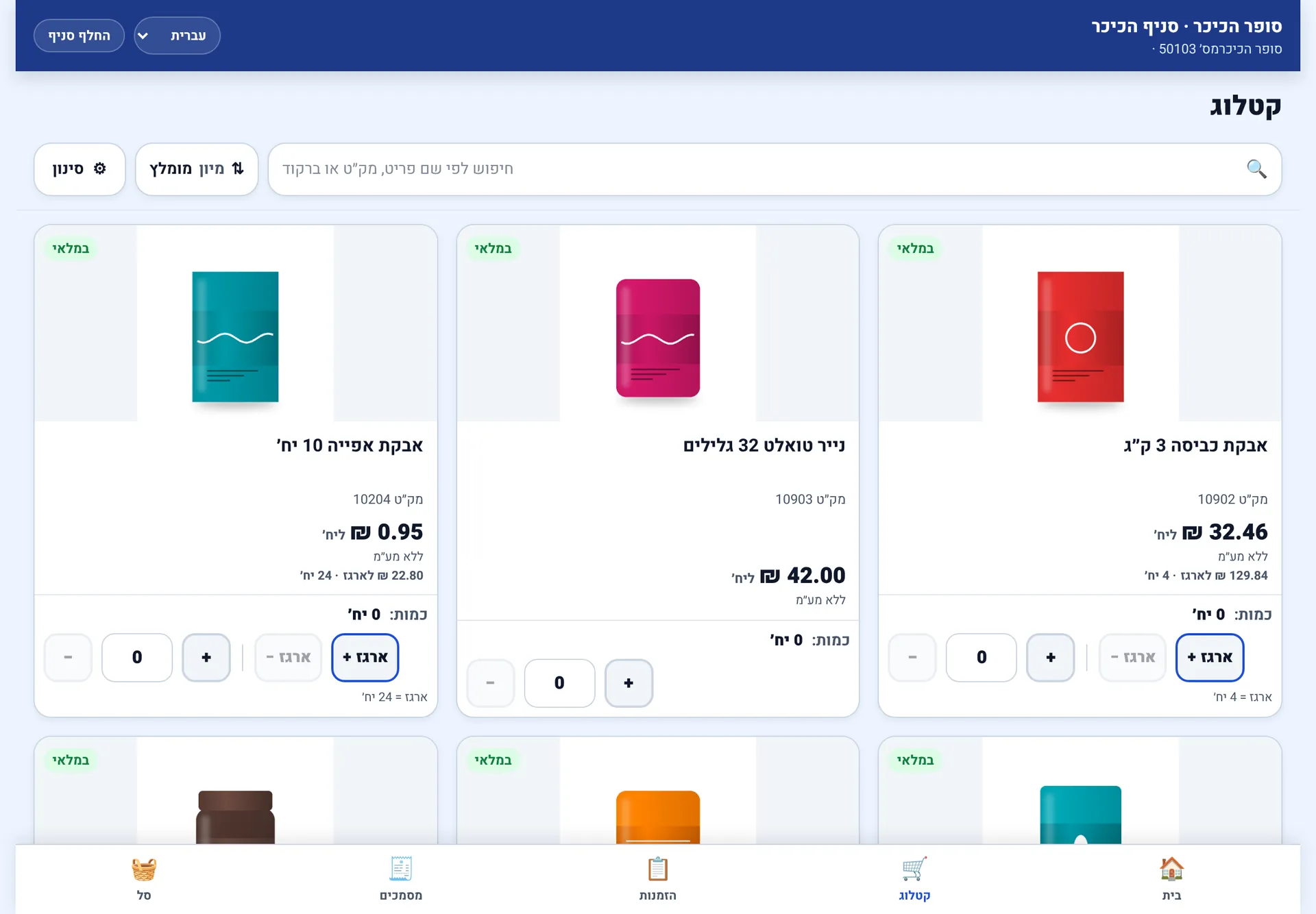
A sales rep needs a tool to sell, not a form to fill in.
The customer's assortment, pictures, availability, the right price, the customer's documents and a fast order. The goal is to help the rep sell, not just to record an order.
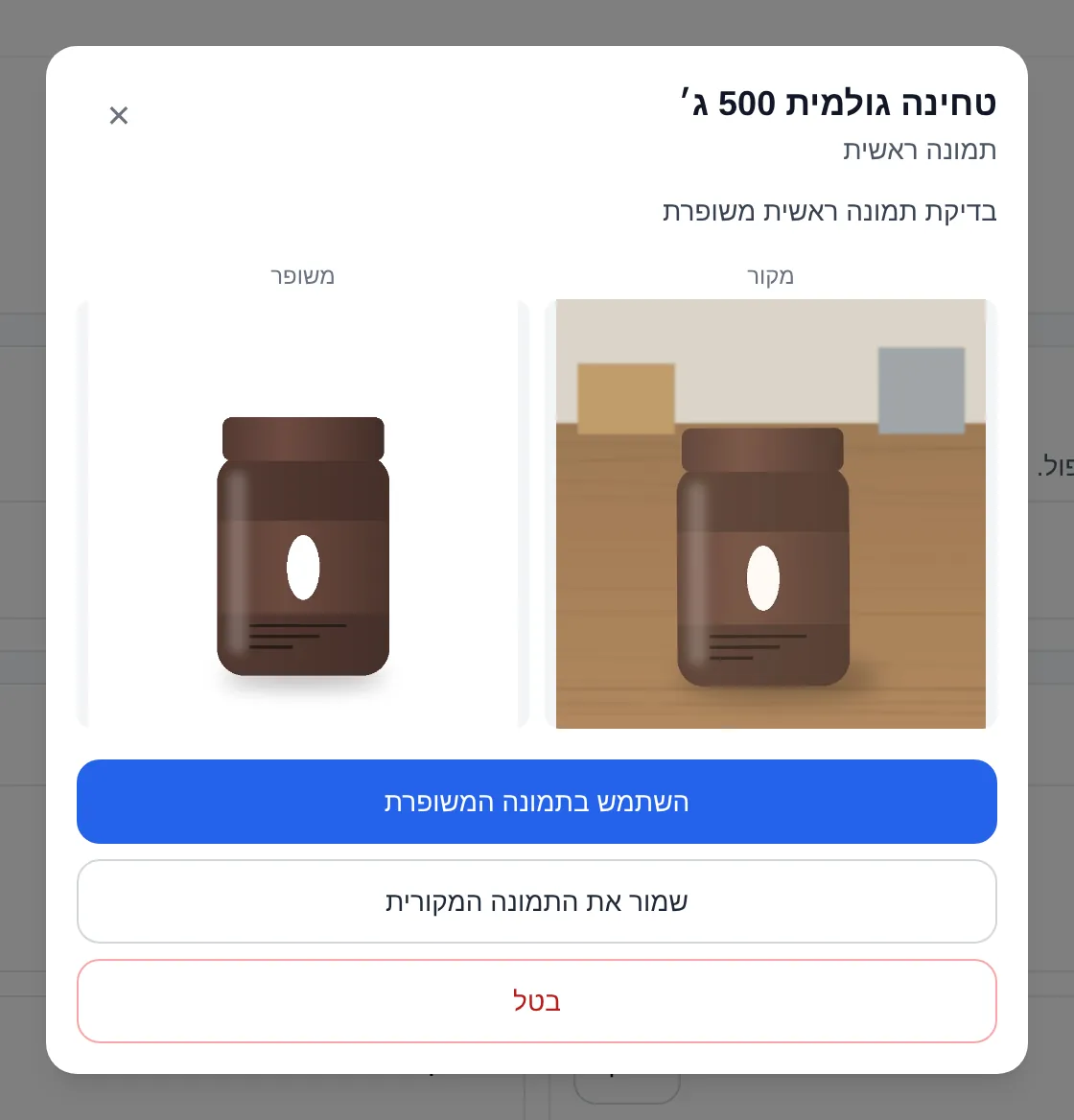
Product data is an asset.
Every product has one identity: description, barcode, images, category, brand, attributes, kashrut and pack size. It feeds every channel, and nobody has to maintain the same truth several times.
Promotions belong in the commercial engine.
Promotions, quantity tiers, assortments and per-customer rules are rules built into the system, not knowledge passed on by word of mouth.
The warehouse exists digitally too.
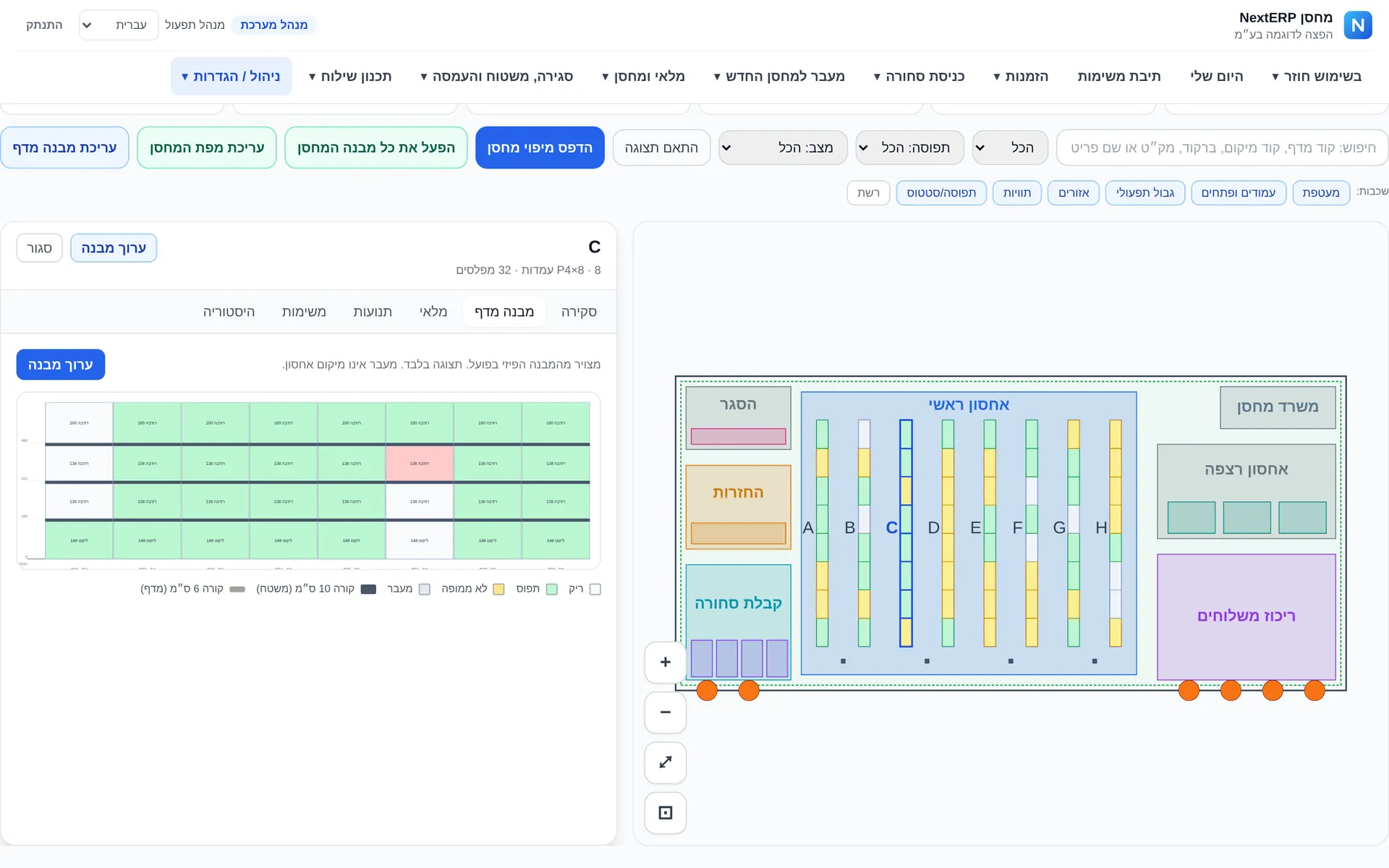
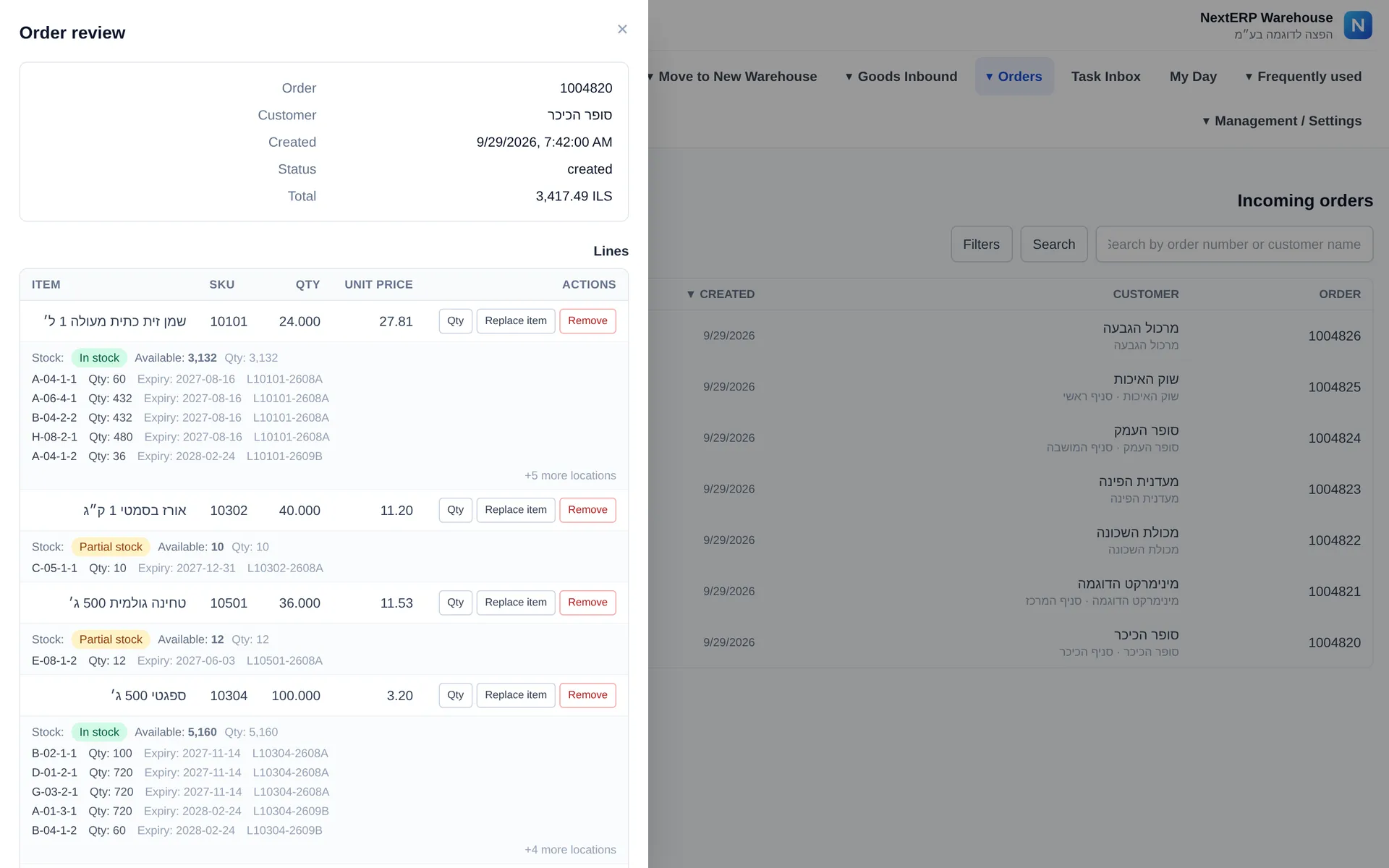
Locations, racks, batches, expiry, picking, counts and movements don't stay in people's heads. The warehouse has a digital representation that runs the work.
A problem becomes a process.
When something is missing, suspicious, expired or doesn't match, the system doesn't settle for a red number. It opens a count, holds an order or sends it to a review queue, with the right person.
The business produces history.
Every meaningful action is recorded as data. That history is the basis for better decisions, better planning and less waste, and later on also for recommendations and less manual oversight.


How it grew
Area after area, out of the work itself.
Each stage was built because the business needed it, and was tested inside the business before we moved on.
The warehouse
Locations, stock and movements instead of lists and memory.
Picking
A handheld for pickers, with counting in cases and units and shortage reporting.
The field
An app for sales reps, with a catalog, a cart and ordering.
The catalog
One product record, with images that reach every channel.
The racks
A digital twin of the warehouse, rack by rack.
The move
Ongoing sync with the existing ERP, and a controlled handover, area by area.
Today
Today it runs inside the business where it all started.
Warehouse locations, stock movements and picking, the sales-rep app, the catalog and pricing all run on NextERP. The move from the existing ERP continues area by area, with the same method we offer every business.
How the move works →


Beyond one business
What started in our business is now being built for other businesses.
The problems we lived with aren't unique to us. They exist at distributors, wholesalers, importers, warehouses and field-sales organizations, and in any business with physical stock and distribution. That's why NextERP grew from a fix for one pain into a system that connects the whole way:
- Customer
- Catalog
- Pricing
- Order
- Stock
- Warehouse
- Distribution
- Documents
- Data
The office, the warehouse and the field. In one system.
If this sounds familiar, let's talk.
Tell us what work looks like for you today. We'll show you what it could look like.